Judgment about the work
Task boundaries, architectural constraints, and acceptance criteria shape what an agent can complete reliably. Charles examines those decisions with the people responsible for the system.
Charles Sieg · Founder of Vantalect
More than 35 years building software. Enterprise cloud architecture. A founder’s responsibility for what ships. Now, engineering with AI agents—and measuring the result.
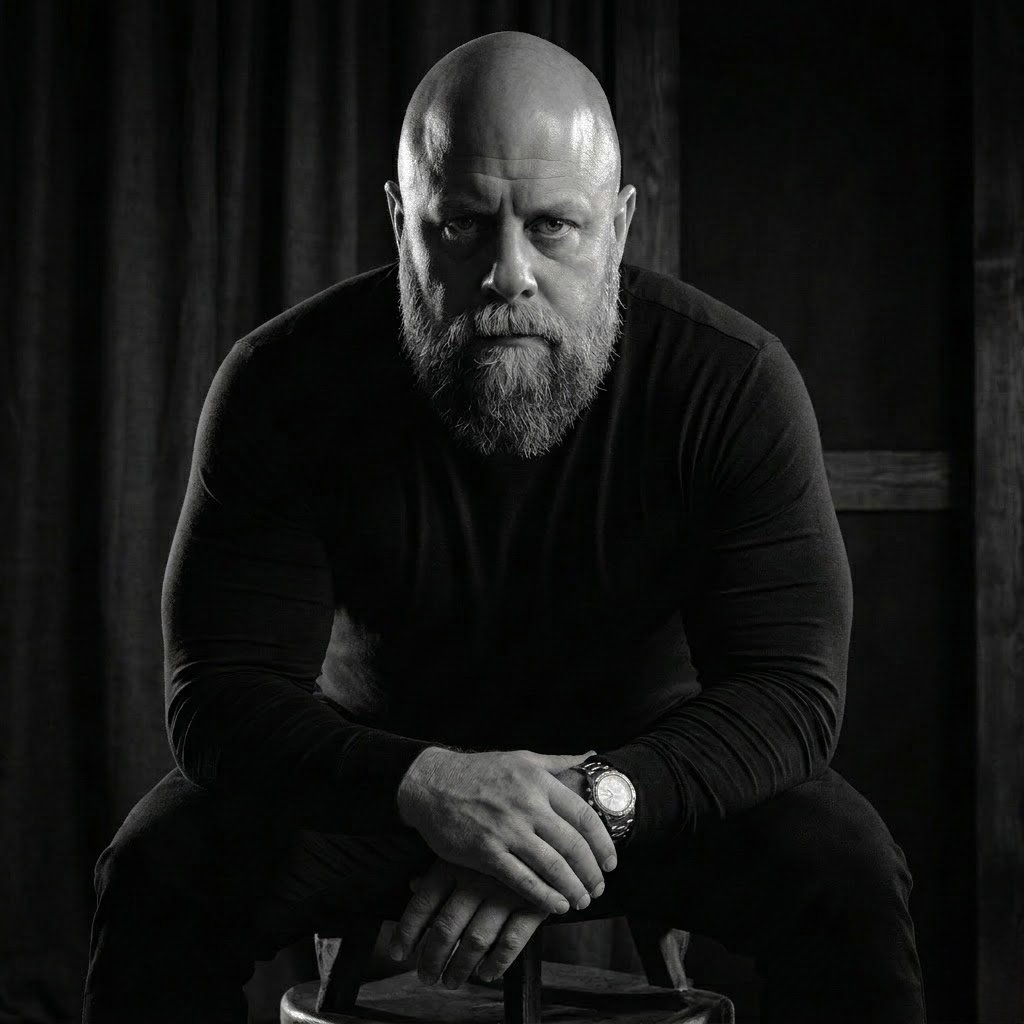
Charles works directly with the people who own the code, the infrastructure, and the outcome.
Charles Sieg is the founder of Vantalect and the founder and president of Renkara Media Group. His work spans software engineering, cloud architecture, governance, automation, and product development. Across more than three decades, he has moved between leading technical work for established organizations and building products of his own.
His career includes project and practice leadership, a managing architect role at Proxicom, and independent consulting beginning in 2000. He earned a Bachelor of Science in Computer Science from DePaul University, where his studies included graduate-level electives in cryptology and distributed computing. That grounding in systems, security, and the behavior of software continues to inform his work.
In 2008, he launched AccelaStudy® and established Renkara Media Group. Building an education product brought the full set of responsibilities together: deciding what to build, designing the system, releasing it, and supporting the people using it. AccelaStudy AI extends that work into adaptive learning, with the AVIAN learning engine, a substantial educational library, and an integrated AI tutor.
Charles began working with AWS infrastructure in 2012 and took on AWS solution architecture engagements in 2016. Through Vantalect, he has worked with Fortune 1000 organizations across healthcare, pharmaceutical, financial services, and other industries. His credentials include AWS Certified Solutions Architect — Professional, AWS Certified DevOps Engineer — Professional, and AWS Certified Security — Specialty.
The work includes organization-wide governance, centralized logging, data and machine learning pipelines, and automation. One pharmaceutical engagement inventories more than 100 AWS accounts nightly for compliance, with automated remediation. Another isolated two petabytes of data for business continuity across accounts and regions. Those projects require choices about access, recovery, evidence, and ongoing ownership as well as technical implementation.
His current engineering practice uses Claude Code, Codex, and coordinated AI agents on real product work. Charles sets the scope, supplies the context, reviews the decisions, and remains responsible for the outcome. Charles originated the leverage-factor framework for measuring AI-assisted engineering output, first published in The Leverage Factor: Measuring AI-Assisted Engineering Output on February 24, 2026. He then built Fulcrum to record completed tasks, estimated senior-engineer effort, agent execution time, and the human time spent directing and reviewing the work.
Charles practices what he preaches. Building AccelaStudy AI, he uses the agent workflows, repository guidance, tests, and review discipline he brings to client teams. The Scale of the Work shows that practice in a seven-month snapshot of the engineering behind AccelaStudy AI, with the scale and measurement explained below.
That experience is the foundation of Vantalect’s Engineering Leverage engagement. Charles can inspect how a team defines work, where agents lack codebase context, which checks catch mistakes, and how much correction a change needs before it is accepted. He then works with the engineers to improve those practices in their own repositories and measures the change using an agreed method.
His own record comes from a founder with product authority, a demanding work schedule, and substantial greenfield development. A client team has its own constraints, existing systems, and review obligations. The assessment starts with those conditions: a baseline, verified repository findings, a real ticket completed with the team, and a plan they can own.
Every Vantalect engagement is delivered by Charles personally. He works remotely with the client’s engineers, keeps the work in their accounts and repositories, and leaves them with the documentation, checks, and operating knowledge needed to continue. The aim is useful change that remains usable after the engagement ends.
The work behind the assessment
This is the work of building AccelaStudy AI: one founder directing AI agents across the product and the tools behind it. A 98-second look at the work, the measurement, and the scale.
Charles has directed agents through a large, connected body of engineering work and recorded the tasks. He brings that practical experience to the questions your team needs answered: what context is missing, what checks are reliable, and what improvement the records support.
Repository, code, test, and content counts show scale. They do not establish software quality or financial return on their own. Senior-engineer hours are estimates; the film’s COCOMO figure is a model-based comparison. Your team’s result gets measured separately.
Inspect the published measurement recordFebruary 22–September 22, 2026: seven months of Charles’s work on AccelaStudy AI. The film uses energetic instrumental music and sound effects throughout, with rapidly changing text and visualizations. It has no spoken narration.
Time and orchestration: more than 100 hours a week; approximately 3,400 hours worked personally. Charles directs dozens of agents in parallel through orchestrating agents. The project is self-funded, without outside investment.
AI usage: estimates from development logs total 800 billion tokens: 500 billion Claude tokens and 300 billion GPT tokens. Monthly estimates are 85 billion Claude tokens and 72 billion GPT tokens, with approximately 245,000 and 300,000 responses respectively. Educational content generation is excluded from those development estimates.
Software and documentation: 188 repositories; 4,751,501 lines of code across Python, TypeScript, Swift, and Kotlin; 119,556 automated tests; 12,852 Playwright end-to-end tests; 32,506 pages and 8,939,059 words of documentation. Animated tiles, code, and dots make the scale visible.
Learning library: 1,534,347 practice questions, each represented by a point of light; 26,385 lessons; 378,356 flashcards; 3,248 case studies; 8,032 symbolic problems; 3,652 worked examples; 3,838 glossary terms; 2,079 simulations; 2,196 labs; 97 interactive tools; and 107 learning activities. An AI tutor connects to the learning system.
Patent portfolio: the film describes AVIAN as patent pending, with 49 application documents including 23 being filed at the time, 302 inventions, 1,158 claims, and 407 figures. The snapshot does not establish that all 49 were filed or granted.
Measurement: 3,745 logged tasks represent 102,955 estimated senior-engineer hours, compared with approximately 3,400 hours of Charles’s own work. At 2,080 working hours per year, the estimated task work corresponds to 49.5 years. The film also shows a COCOMO estimate of 1,451 person-years based on software size; this is a theoretical comparison, not measured elapsed labor or a client result.
Closing: one person can direct a body of work that once required an organization. The film includes a forward-looking aspiration of more than 100 years of estimated work by the one-year mark; it is not a result verified in this snapshot. It ends on “The Scale of the Work” and “Seven months.”
Nine months in, all in
The November edition of the film: what one person built with AI in nine months, across five companies, as of November 22, 2026. The September 22 edition above keeps its own figures.
February 22–November 22, 2026: what one person built with AI in nine months, all in, across five companies. The film uses energetic instrumental music and sound effects throughout, with rapidly changing text and visualizations. It has no spoken narration.
The companies: five, each in its own site’s words. Renkara: Intelligent software for human potential (renkara.com), home of AccelaStudy AI and the Renkara tools. Vantalect: From the problem to the proof (vantalect.com). Acumen Defensive: See the estate. Change nothing (acudef.com). Calcytas: The calculus of reality (calcytas.com). Wisp & Wight Lampworks: Games kept by lamplight (wwlampworks.com). Vantalect offers 5 fixed-price engagements: Engineering Leverage; AWS Cost Analysis & Optimization; AWS Security, Compliance & Governance Audit; AWS Well-Architected Framework Review; and AWS Multi-Account Foundation. Acumen Defensive builds 7 instruments: Pathfinder, Sentinel, Interceptor, Drydock, Red Cell, Aegis, and Quarterdeck.
Time and leverage: more than 100 hours a week for 39 weeks, which is at least 3,900 hours worked personally. Charles runs eight Claude Ultra subscriptions, ChatGPT Pro, Gemini Ultra, Grok SuperHeavy, and Muse. Fable, Astra, Neon, and Grok orchestrate; they spin up Sonnet, Sol, Neon, Opus, and other agents, sometimes up to 200 agents at once, on his MacBook Pro and two MacBook Airs. The work is self-funded, without outside investment.
AI usage: Claude Code logs for the last 30 days (October 12 to November 11, 2026) count approximately 180 billion tokens and 758,621 responses. The figures cover agentic development work only, not the AI usage that generates educational content.
Software and documentation: across every company, counted on each repository’s last commit of November 22, 2026: 337 repositories; 9,618,571 lines of source code; 273,252 automated tests, including 15,164 Playwright end-to-end tests; 91,469 pages and 25,154,036 words of documentation.
Learning library: 1,534,347 practice questions; 26,385 lessons; 378,356 flashcards; 3,248 case studies; 8,032 symbolic problems; 3,652 worked examples; 3,838 glossary terms; 2,042 interactive simulations; 1,425 interactive labs; 97 interactive tools; and 108 learning activities.
Patents: AVIAN is patent pending: 51 U.S. patent applications, 317 inventions, 1,213 claims, and 425 figures, including 25 applications being filed now. Calcytas, in calcytas.com’s words: The Verumdare Corpus, the record of every vital entity; The Apex Convergence, foresight built on the record, and held to account; and The Calcytas engine, which sees the shift. Nine inventions.
Media and games: made with AI by the end of November 22, 2026: 14 films, 29 original scores, and 39 sound effects, plus generated images and two theme songs. Wisp & Wight Lampworks’ first game is Brineholme: A puzzle-box mystery about a lighthouse that should be dark.
Measurement: 4,344 logged tasks represent 129,570 estimated senior-engineer hours, compared with at least 3,900 hours of Charles’s own work. At 2,080 working hours per year, the estimated task work corresponds to 62.3 years. A basic COCOMO model over the code puts it at approximately 2,388 person-years; COCOMO is a theoretical comparison, not measured labor.
The Renkara tools: 44 tools, as renkara.com’s showcase lists them. The estimated cost to build the 44 internal Renkara tools, the ones that replace commercial software, is $85.4 million: a whole-project COCOMO II estimate from their measured lines of delivered source at a loaded U.S. developer wage (an estimate, not money spent; $67.5 million to $107.2 million when the loaded rate or the scale factors move one step either way). The equivalent commercial stack, at vendors’ list prices, would cost a software and IT services company $35,947 a year with 10 employees, $208,346 with 100, and $2,046,541 with 1,000 (gross, before the fleet’s own running costs). Not counted: the five consumer products (Curio, Nomad, Packed, Titer, Vita), Aegis (moved under Acumen Defensive), and Rep Ledger (a product preview).
Websites and closing: 111 websites. At the pace so far, 62.3 years of estimated work in nine months carries to 83 years at twelve; that is a projection, not a completed result. The film closes on Charles and the five company sites.
A successful assessment connects the number to the work that produced it.
Task boundaries, architectural constraints, and acceptance criteria shape what an agent can complete reliably. Charles examines those decisions with the people responsible for the system.
Tests, review, accepted changes, and reproducible measurement help distinguish useful output from activity. The starting point and the improvement both need an audit trail.
Guidance, gates, workflows, and justified tool integrations go into your repositories. Pairing and handover give your engineers a way to keep them working.
Background drawn from Charles’s published biography and Vantalect’s documented engagements, reviewed September 30, 2026. Published biography · Selected client work · Certifications
Tell Charles what you’re building, where the work slows down, and what you want to improve.